When grief persists for months or years without relief, it can alter every dimension of an individual's life, leaving them stuck in a cycle of emotional exhaustion and daily disruption. Whether caused by the loss of a loved one or life-altering non-death transitions like divorce or career shifts, long-term grief requires specialized psychological care. Through evidence-based approaches—such as Complicated Grief Therapy, somatic grounding, and the Dual-Process Model of Coping—professional counseling helps individuals process complex emotions, regulate their nervous systems, and integrate loss to safely rebuild resilience, purpose, and lasting hope.
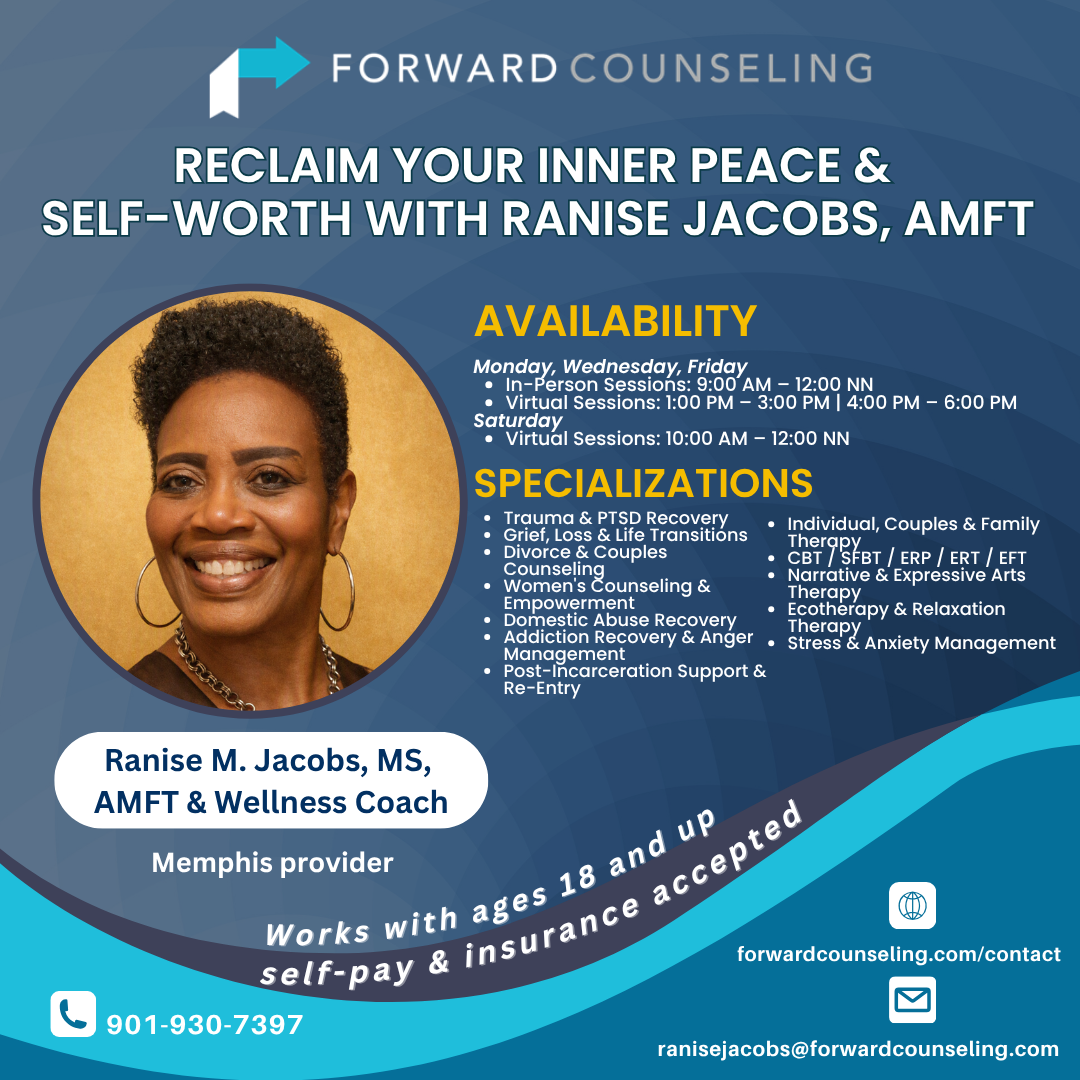
In an exclusive Q&A spotlight, Forward Counseling introduces Ranise M. Jacobs, MS, AMFT, an Associate Marriage and Family Therapist, Personal Growth Coach, and Arts Facilitator dedicated to helping clients navigate anxiety, trauma, and major life changes. Blending evidence-based modalities like CBT and SFBT with somatic grounding, nature-based ecotherapy, and creative expression, Ranise provides a compassionate, holistic space where every client is honored as the expert of their own healing journey. Whether you are a woman rebuilding self-worth after divorce or incarceration, a couple seeking deeper connection through EFT, or an individual looking to manage everyday stress, Ranise offers practical tools and expert guidance to help you reclaim your inner peace.
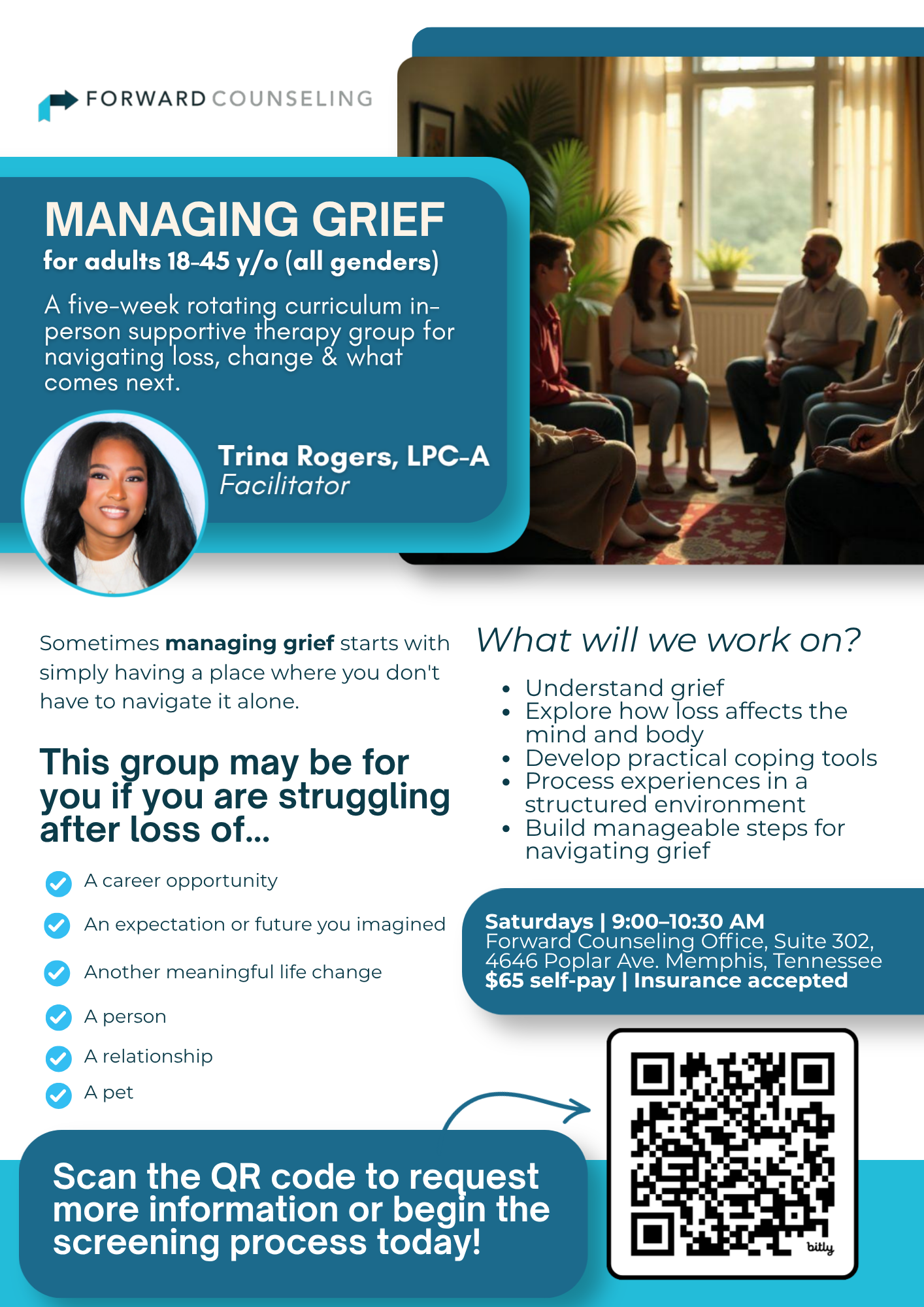
Navigating loss can feel deeply isolating, but you don't have to carry it alone. Our Managing Grief group with Trina Rogers, LPC-A, provides an in-person, trauma-informed space in Memphis to process emotions, learn practical coping tools, and rebuild connection alongside peers who understand. Read through our comprehensive FAQs to learn more about the group structure, screening process, scheduling, and what to expect during our Saturday morning sessions.
East Memphis, TN: 4646 Poplar Ave, Suite 302, Memphis, TN 38117
Mississippi: Address coming soon
Nashville, TN: 503 A Ligon Drive, Nashville, TN 37204
Jackson, TN: Address coming soon
Knoxville, TN: Address coming soon
As colder months bring shorter daylight hours and lower temperatures, the physiological impact of reduced sunlight can disrupt your circadian rhythm, lower serotonin levels, and lead to Seasonal Affective Disorder (SAD). In the workplace, this physiological shift often surfaces as brain fog, persistent fatigue, and heightened burnout, making routine tasks feel overwhelming. By adopting proactive workplace wellness strategies—such as morning light exposure, time-blocking, and structured group support—professionals can protect their cognitive health, restore energy, and navigate seasonal transitions with resilience and peace.