"Somehow, I Forgot Myself": Breaking the Cycle of Self-Neglect through Community Healing with Nemetria Tate, PsyD
/Are you constantly putting others first, struggling with boundaries, or feeling profoundly disconnected from your true self?
You are not alone.
Many adults find themselves asking, "Somehow, I forgot about myself."
We sat down with Dr. Nemetria Tate, PsyD, the insightful facilitator of our new eight-week online therapy group here at Forward Counseling, to discuss this common struggle.
This empowering program is designed specifically for adults (ages 18+) ready to stop pouring from an empty cup and start rebuilding their lives with clarity on their deepest values, tools for healthy self-love, and powerful, supportive community.
Join us as Dr. Tate shares how this group, meeting online every Wednesday starting in January 2026, can guide you back to your peace and true identity.
What are some subtle signs that someone has lost connection with themselves without realizing it?
Some subtle signs that someone is disconnected from themselves are struggling to answer questions like, 'What do I want or need?' or feeling immense guilt when their answers center around themselves. An individual may struggle to identify their own emotions or notice random resentment. They don't engage in activities only for their enjoyment. They find themselves often behaving in a manner that someone else has told them is expected of them. Also, they will notice changes in their health and find themselves giving excuses as to why they cannot focus on taking care of themselves.Many people feel guilty prioritizing their own needs—why does this happen, and how can group therapy help shift that mindset?
People tend to feel guilty about prioritizing their needs because of their lived experiences. Someone they looked up to engaged in "selfless" behavior, so they believe that is what they are supposed to do to be a good person. Sometimes, they have received messages from other people that have told them they are selfish if they ever think about themselves. Some other messages create roles people are expected to follow based on their identity. Group therapy can help shift these mindsets by helping a person to take different perspectives and develop more flexible thinking patterns.What do you wish more people understood about self-neglect and emotional burnout?
I wish more people realized that self-neglect and emotional burnout are not symbols for how much you love others or having outstanding character. Failure to correct this behavior can actually be detrimental to the people you love, which should include yourself.How does healing in a community setting differ from healing alone?
Group therapy is different from healing alone because it reminds us we are not alone in our struggles. There are other people that can relate to us, understand us, provide validation, and encourage us to continue to do what causes us discomfort.What would you say to someone who feels “too overwhelmed” to even join a group?
For people who feel "too overwhelmed" to even join a group, I want them to ask themselves what is causing them to feel that way. Are they overwhelmed because they feel alone or cannot think of anyone they can turn to for support? If the answer is yes, that is an indication that community healing could be beneficial. You've been trying to figure it out solo; why not see what difference having someone else present can make?
Can you describe a moment (without violating confidentiality) when you witnessed a meaningful transformation in group therapy?
One of the most meaningful transformations I have had the honor of witnessing was a client sharing a past experience, how it impacted the person they became, and their genuine feelings about it. The client then instantly started to apologize for this negative thinking, and the group immediately stepped in. Multiple clients stated they did not realize other people felt the same way they did and how hearing it come from someone else helped them to reflect on their own lives using a different lens. From then on, I noticed clients being more vulnerable in session, and they helped each other problem-solve hard situations they had been struggling with, often for over a decade.How do you help participants feel safe and comfortable opening up during the first few sessions?
During the first few sessions, I like to have clients help set group rules so we all can determine what would help everyone to feel safe and have a sense of belonging. There are reminders to not share others' information, and clients only need to share what makes them comfortable. I love to incorporate humor to make people feel more at ease. Also, there are some activities so people don't feel that immediate pressure to fill the silence with people they are just meeting.
What changes do you often see in clients when they finally begin putting themselves first again?
Some of the changes clients see when they start to prioritize themselves are more happiness and giving themselves permission to experience uncomfortable emotions. They are more patient and compassionate with themselves. Many find themselves doing at least one thing that they usually would talk themselves out of and wondering how they deprived themselves for so long. Some will notice positive changes in their relationships and feel more confident about asking for help.If someone is unsure about joining, what small first step would you encourage them to take toward reconnecting with themselves?
A small step that they could take is to get a sheet of paper and pen. Set a timer for 5 minutes, and write down all of the things they could possibly think of that they like or need that are not related to another person. If you don't have much written down or have alot written that you don't find yourself engaging in as much as you would like, I think you should consider the group. It is a short-term commitment to test yourself and see if you are ready to take this journey.
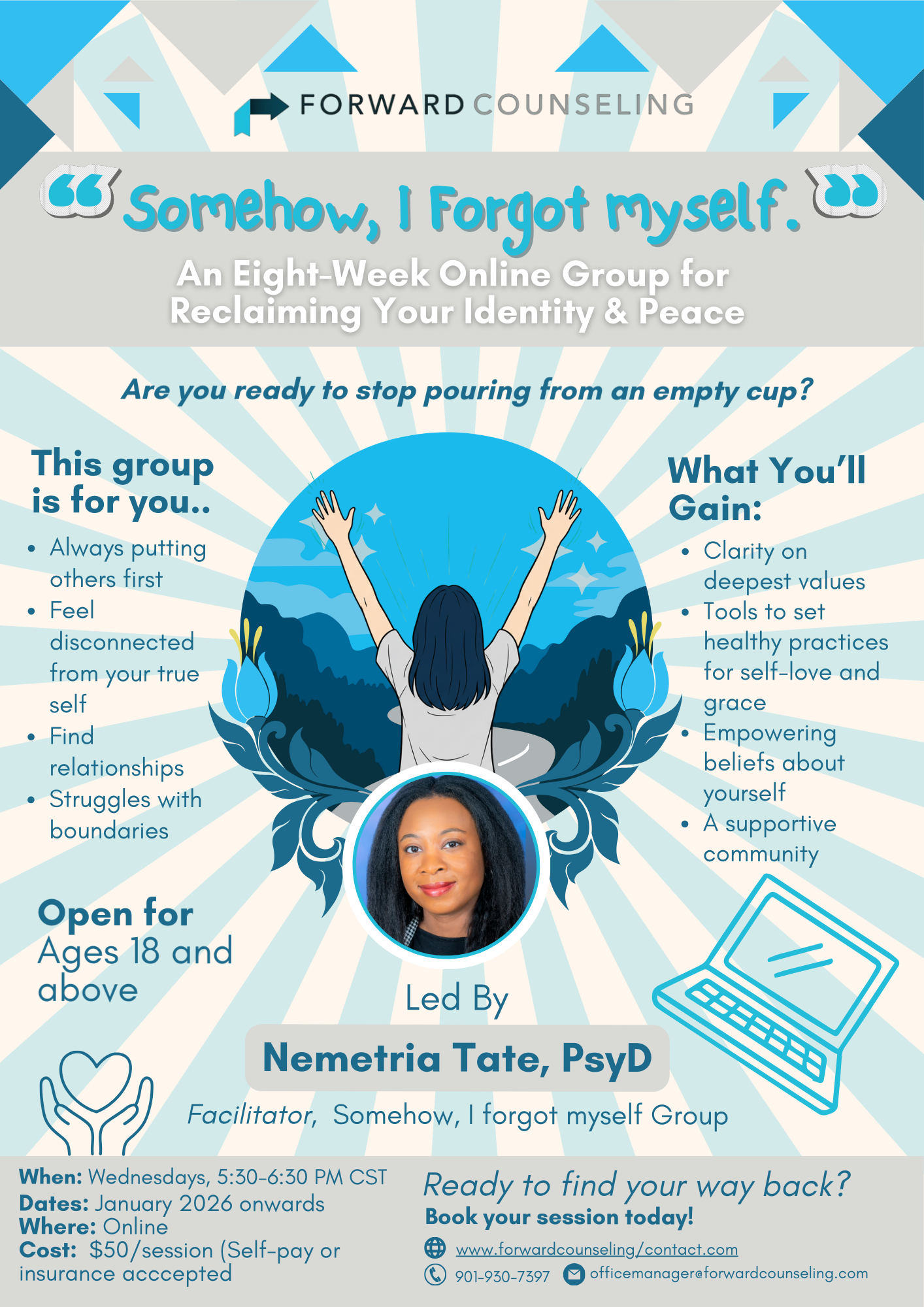
This highlights a beautiful truth: you don’t have to navigate the path back to yourself alone. If you resonated with the signs of resentment, the struggle to say "no," or the feeling of an empty cup, this is your invitation to trade self-neglect for self-nurturing. 🌸
Ready to reclaim your identity and peace? Don’t wait until you’re completely burned out to prioritize your well-being. Take that first brave step today by joining our supportive community starting in January 2026!

Start your 2026 right; join us in person or virtually because together, we are each better every day.
📞 Call us: 901-930-7397
📧 Email: officemanager@forwardcounseling.com