Broaden your internal narrative with Trina Rogers, LPC-A
/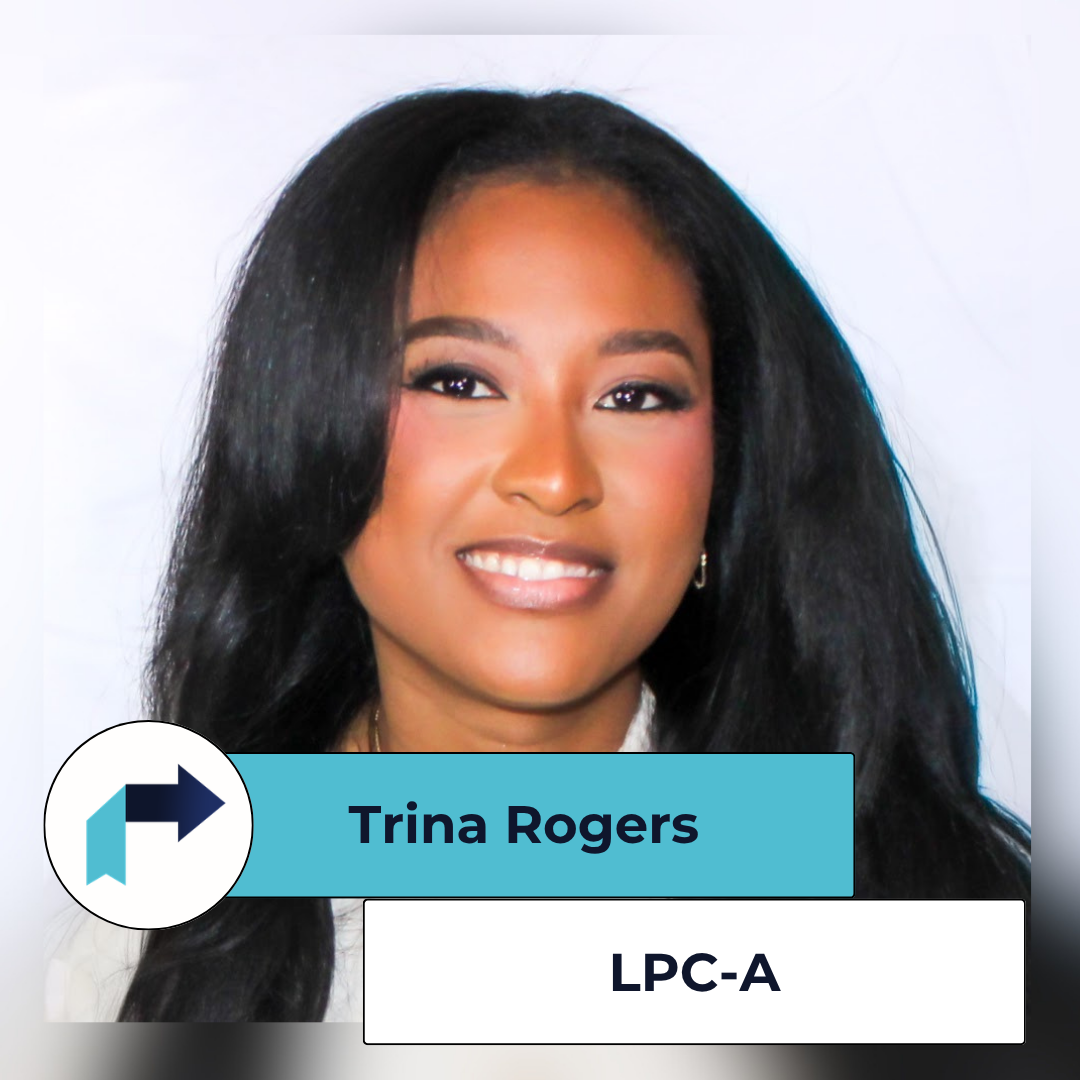
After a successful 14-year career in IT, Forward Counseling’s new provider Trina Rogers, LPC-A, returned to a calling shaped in childhood when she first witnessed unaddressed grief and mental health challenges in her community.
Driven by a desire to provide accessible, direct-impact care in Tennessee, Trina approaches therapy not as a rigid set of rules, but as a deeply collaborative partnership where adults can safely examine their internal narratives. Grounded in a trauma-informed framework that spans CBT, DBT, ACT, IFS, and Compassion-Focused Therapy, her practice honors each client’s unique history while gently helping them dismantle survival armor that no longer serves them.
Below, our in-depth Q&A explores her clinical philosophy, her multi-modality approach to trauma, burnout, and life transitions, and her deep commitment to helping clients broaden their internal narratives and step into lasting mental wealth.
What inspired you to become a mental health therapist, particularly an LPC?
I’ve wanted to work in mental health since I was about 9 years old. That’s when I first remember witnessing a lot of grief and mental health challenges in my community. I remember wondering why we had doctors for physical health but not the same kind of support for what people were experiencing emotionally.
As I got older, I learned more about the different professions in mental health, but for a long time, I couldn’t see that path for myself. I spent 14 years building a career in IT before eventually finding my way into mental health as a career path.
I chose the LPC path in Tennessee because I wanted to provide accessible mental health services and have a direct impact on the community I serve.You integrate a wide range of evidence-based modalities—from CBT and DBT to ACT, REBT, and compassion-focused therapy. How do you customize this diverse toolkit to assist adult clients in reinterpreting their internal narratives and breaking old cycles?
In the first few appointments that I have with a client, I primarily use the broader modalities, CBT and DBT, to see if any interventions are especially effective. When clients are not pushed into a specific theory, it’s my experience that they will show signs of preferences or breakthroughs from this starting point. CBT can provide a starting point for exploring thought patterns and may lead us toward REBT or compassion-focused therapy when a client is ready to examine deeply held beliefs or develop more compassion toward themselves. DBT can provide a foundation for emotional regulation and create opportunities to incorporate ACT or motivational interviewing when the focus shifts toward making meaningful changes in daily life. My goal is not to use every tool with every client. It is to understand what the client needs and introduce the right tools at the right time.When working with clients carrying deep trauma, PTSD, or grief, how do Internal Family Systems (IFS) and Compassion-Focused Therapy help them soften their internal armor and build self-compassion?
There are often feelings of shame and guilt attached to trauma, grief, and the ways a person continues to carry those experiences. In turn, this can create some internal resentment. Both IFS and CFT aid the client in approaching their armor with understanding rather than resentment. The armor developed for a reason, most likely for some form of safety. With that as a starting point, IFS can help the client broaden their perception of self from the parts associated with these experiences to other more adaptive parts, and CFT helps the client to practice skills such as acceptance and warmth for these parts. The goal is not to get rid of the armor. It is to understand why it developed and help the client decide when they no longer need it.Burnout and severe anxiety often make people feel trapped by their thoughts. How does Acceptance and Commitment Therapy (ACT) help adults stop struggling against their anxiety and start taking value-aligned action?
Burnout and severe anxiety can reinforce a cycle between our thoughts, emotions, physical responses, and behaviors. ACT helps clients recognize that cycle without making the goal the complete elimination of anxiety. Instead, we focus on what matters to the client and identify small steps they can take even when difficult thoughts or emotions are present. As clients practice responding differently, they can begin to rebuild confidence in their ability to move forward. Over time, those small changes can create momentum toward a life that feels more aligned with who they want to be.
5. Depression often stems from rigid or self-defeating core beliefs. How do you use REBT and CBT to help clients identify these unhelpful patterns and replace them with empowering, realistic perspectives?
I don't believe moving from depression to optimism is realistic or sustainable for every client. That can be especially true when someone is managing Major Depressive Disorder or another mood disorder. Instead, REBT and CBT give clients tools to gradually examine the beliefs and automatic thoughts that reinforce how they are feeling.
Depression is more than negative thinking, but our thoughts can reinforce the emotional experience. By learning to question rigid or unrealistic beliefs, clients can create some distance from those patterns. That space allows them to make choices that are more realistic and more aligned with their values.6. Change can be overwhelming, especially when navigating substance use or behavioral habits. How does motivational interviewing assist clients who feel ambivalent or stuck in taking the next step toward recovery?
Some clients have learned to function in their daily lives while also managing substance use or behaviors that are no longer serving them. Because they have been able to function, they may not immediately see a reason to make a change.
Motivational Interviewing gives us a way to explore that ambivalence without forcing a decision. We start with the client's own goals and desires. From there, we look honestly at whether their current behaviors are helping them move toward those goals or making that path more difficult.
The clinician cannot make the decision to change for the client. The client has to own that decision. My role is to help them explore both sides of that decision so they can understand why they want to move forward and take responsibility for the path they choose.7. Major life shifts—like career pivots, loss, or personal identity changes—frequently trigger grief and anxiety. How do you support adults (18+) as they reorient themselves through these difficult life transitions?
Life transitions can shake a person's confidence. I have found that understanding this is an important starting point. Anxiety and grief may be what brings someone into therapy, but underneath those emotions is often a loss of confidence in who they are or what comes next. When working with someone through a major transition, we focus on rebuilding that confidence. One approach I find helpful is borrowing confidence from past experiences, personal strengths, talents, or even supportive people in the client’s life. As confidence grows, clients often feel more equipped to face the uncertainty, grief, and anxiety that come with change.
8. For clients experiencing intense emotional volatility or relationship distress, what are a few core DBT skills you frequently introduce to restore daily emotional stability?
When emotions become intense, it can feel like they take over the entire experience. Skills such as TIPP can help clients reconnect with their bodies and return to the present moment before trying to find resolution. That pause creates some internal space between the emotion and the response. From there, we can work toward understanding what is happening and deciding what the client actually needs.
For relationship distress, I may introduce skills such as IMPROVE or ABC. These skills can help clients pour back into themselves when a relationship begins to feel like it is taking more from them than it is giving.
9. You emphasize that meaningful change comes from changing how we relate to our experiences. What does "changing your relationship to your story" look like in practice for someone recovering from past trauma?
Trauma can leave people with deeply rooted feelings of victimization, hopelessness, or helplessness. Over time, those beliefs can become part of a cycle that reinforces how a person sees themselves and what they believe is possible for their future.
Changing your relationship to your story does not mean rewriting it or pretending that what happened was not painful. I want to help clients broaden their understanding of their story. This can be the power of AND. What happened to you is true, and you can also recognize how you survived it. You can acknowledge what was taken from you and recognize what you have developed because you continued moving forward. The goal is not to invalidate the existing story. It is to help clients see that their story contains more than what happened to them.
10. How does flexibility support clients who are managing busy work schedules, burnout, or tight routines?
I carry several roles in my own daily life, as many of my clients do. I understand how difficult it can be to make time for yourself while managing work, family, and other responsibilities. I built my schedule with that reality in mind. Offering both virtual and in-person sessions gives clients more options for making therapy fit into their lives. I believe therapy should be accessible enough to become part of a person's routine rather than another source of stress.
11. For a new client, what can they expect during their first collaborative session with you?
The first session is an opportunity for us to begin building a working relationship. I don’t start with assumptions about what a client needs. Sometimes it takes time for those needs to be fully understood and verbalized because vulnerability requires a certain level of trust and safety. The first few sessions are often about learning how we will work together. I want to understand how the client experiences their challenges and what they hope to gain from therapy. From there, I gradually introduce interventions that fit their needs and have the potential to be useful. I want therapy to feel collaborative rather than like something being done to the client.
12. What is the one thing you hope every client walks away with after working with you?
I want every client to know that they have options. When we are in the middle of something painful, it can be difficult to see those options or believe that change is possible. That does not mean the options aren’t there. Therapy can provide a safe space to develop the tools needed to recognize those options and decide what to do with them. We cannot rewrite the past, but we can change how we understand it and how we move forward from it. I want my clients to leave therapy with a greater sense of possibility. Your story doesn’t end with what brought you into my office. In many ways, it’s just beginning.
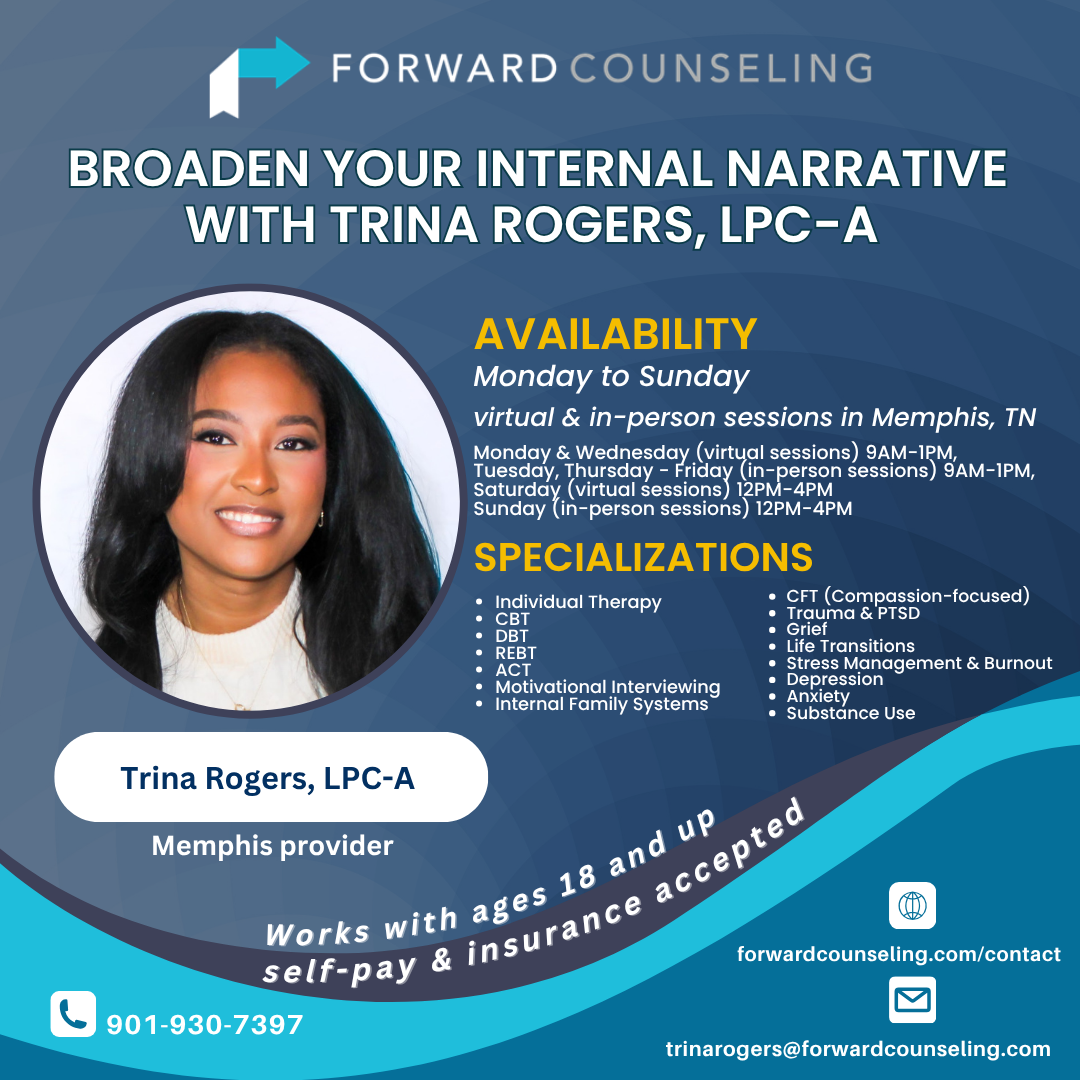
Ultimately, therapy with Trina is centered on restoring biological sovereignty, personal agency, and a renewed sense of possibility. By offering flexible, seven-day-a-week scheduling in East Memphis—spanning both in-person and virtual care—Trina ensures that prioritizing your mental health fits seamlessly into daily life rather than becoming another source of stress. Whether you are navigating complex trauma, life transitions, substance use, or chronic burnout, working with Trina offers the exact container needed to stop struggling against your story and start taking values-aligned action toward long-term mental wealth.

Ready to broaden your internal narrative and step into lasting mental wealth? 🧠✨