Reclaim your Inner Peace & Self-Worth with Ranise Jacobs, AMFT
/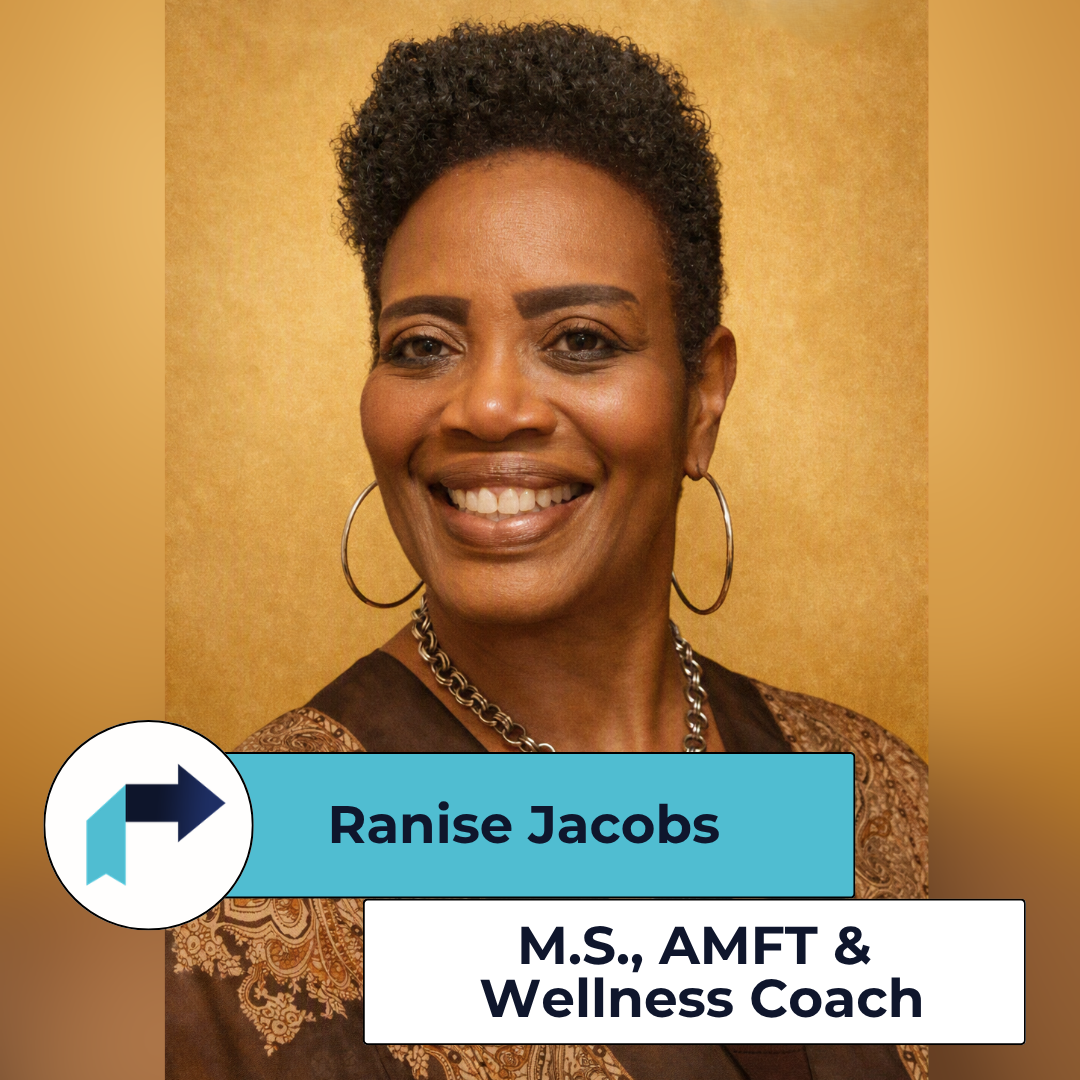
Finding a therapeutic space where you feel genuinely seen, understood, and empowered is one of the most transformative steps you can take for your mental health and personal growth. At Forward Counseling, Ranise M. Jacobs, MS, AMFT & Wellness Coach brings a deeply compassionate, client-centered approach that blends clinical expertise with rich life experience. As an Associate Marriage and Family Therapist (AMFT), Personal Growth and Development Wellness Coach, Stress Management Trainer, and Creative Arts Facilitator, Ranise is dedicated to helping individuals, couples, and families navigate life’s most complex transitions.
With over five years of experience as a psychotherapist and more than 30 years as a Correctional Counselor and Supervisor supporting justice-involved individuals through re-entry and personal development, Ranise possesses a unique depth of empathy, resilience, and real-world perspective. Her practice supports adult outpatient clients dealing with chronic stress, generalized anxiety, depression, trauma, grief, relationship distress, and life adjustments.
Ranise’s therapeutic style honors every client as the true expert of their own life. Integrating evidence-based modalities—such as Cognitive Behavioral Therapy (CBT), Solution-Focused Brief Therapy (SFBT), Exposure and Response Prevention (ERP), Emotionally Focused Therapy (EFT), Family Systems, and Creative Arts—she walks alongside her clients to help them manage anxiety, rebuild self-worth, restore emotional connection, and uncover lasting inner peace.
Below, Ranise shares an in-depth look into her clinical approach, specialized techniques, and commitment to holistic healing in an exclusive Q&A.
1. You blend Cognitive Behavioral Therapy (CBT) with Solution-Focused Brief Therapy (SFBT) in your practice. How do you help clients balance shifting unhelpful thought patterns with taking immediate, practical steps toward their future goals?
I help clients balance shifting unhelpful thought patterns with taking immediate, practical steps by combining cognitive restructuring with solution-focused action planning. This integrated approach allows clients to understand why they think and feel the way they do (CBT) while simultaneously building hope, motivation, and forward movement (SFBT).
My work begins with psychoeducation on cognitive processing. I teach clients how thoughts directly influence emotions and behaviors, helping them identify and challenge common cognitive distortions like all-or-nothing thinking, catastrophic thinking, and overgeneralization. By replacing rigid, negative thoughts with realistic, compassionate, and evidence-based statements, clients experience a reduction in emotional intensity and an increase in problem-solving capacity.
We then focus on identifying triggers and building awareness. Clients learn to catch distorted thoughts early and recognize moments when the problem is not present. In SFBT, we call these "exceptions". Exception-finding strengthens self-efficacy and proves to the client that positive change is already occurring. We test negative thoughts against evidence, reframe extreme interpretations, and identify a small, tangible action step that can be taken within 24 hours.
To support this cognitive shift, I teach somatic relaxation and self-regulation skills, including deep breathing, progressive muscle relaxation, time-management strategies, and mindfulness-based stress reduction. Reducing physiological arousal makes cognitive restructuring far more effective.
Once clarity is gained, we lean into future-focused SFBT techniques: setting goals using the client’s own language, asking the "Miracle Question" to define desired outcomes, using scaling questions to measure progress, and identifying strengths. The rhythm of this integrated approach is simple yet powerful: Insight → Regulation → Action → Reinforcement → Progress. Clients leave every session equipped with both a new way of thinking and a concrete action step to take.
2. Anxiety often manifests physically through body tension and restlessness. How do you incorporate Relaxation Therapy and somatic techniques to help clients regulate their nervous system during sessions?
Anxiety almost always shows up physically long before a client can consciously name what they are feeling. To help clients regulate their nervous system, I intentionally combine Relaxation Therapy with somatic grounding techniques that build safety, self-awareness, and physiological calm.
It starts with establishing a calm, non-judgmental, and comfortable therapeutic atmosphere. Whether that means offering water or coffee, playing soft background music, using grounding sensory items, or stepping outside for a brief walk, I meet clients exactly where they are. Before diving into stressors, I guide them through a holistic four-domain check-in:
Physical: Checking for tension, posture, and breathing patterns.
Emotional: Assessing mood, emotional intensity, and overwhelm.
Mental: Identifying racing thoughts, worry loops, and cognitive fatigue.
Spiritual: Tuning into their sense of grounding, purpose, or disconnection.
Once we identify where anxiety is living in the body, I guide clients through body-based grounding exercises. We utilize diaphragmatic and box breathing, progressive muscle relaxation to release stored muscular tension, body scanning, and sensory grounding through texture, sound, or temperature.
Throughout our conversations, I encourage clients to notice how their body responds in real time as they talk about emotional triggers. We weave in guided imagery, calming visualizations, gentle grounding affirmations, and self-soothing practices. By learning how anxiety operates within their physiology, clients discover how to interrupt the stress cycle and build an internal sense of safety and control.
3. For couples experiencing emotional distance or ongoing conflict, how do you use Emotionally Focused Therapy (EFT) to restructure communication and rebuild trust?
I use Emotionally Focused Therapy (EFT) to help couples transition away from emotional distance and reactive conflict toward secure connection, mutual trust, and compassionate communication. My approach blends psychoeducation, emotional processing, and structured relational exercises.
First, we establish clear individual and shared goals so both partners feel equally seen, valued, and supported. I provide psychoeducation on attachment needs, explaining how couples get stuck in repetitive negative cycles where unmet emotional needs often present as anger, defensiveness, or withdrawal. Understanding this helps partners stop blaming one another and recognize the negative cycle itself as the real adversary.
When repairing emotional injuries or broken trust, I guide couples through:
Naming the specific emotional injury.
Processing its deeper emotional impact on each person.
Expressing authentic vulnerability rather than falling back on defensiveness.
Practicing active empathy, active listening, and genuine accountability.
We work together to identify physiological conflict triggers so partners learn how to pause, co-regulate, and support each other's nervous systems when conversations heat up. Additionally, we explore intimacy needs, primary love languages, and rituals of connection. By establishing healthy boundaries and learning to turn toward each other rather than away, partners replace fear and frustration with lasting emotional safety.
4. When verbal communication feels overwhelming or difficult, how do creative arts modalities allow clients to safely explore and express complex emotions?
When words feel inaccessible, guarded, or simply insufficient, creative arts modalities offer a safe, intuitive, and non-threatening pathway to externalize deep emotional experiences.
Non-verbal expression takes off the pressure of having to "find the right words". Clients can engage through drawing, painting, sculpting, writing, coloring, photography, movement, or role-play. I often provide guided reflective prompts that allow clients to gently connect with hidden feelings, unresolved memories, internal conflicts, somatic sensations, and unmet needs.
Creating art allows a person to "put their feelings somewhere" outside of themselves. Externalizing emotions helps clients view their struggles from a healthy distance, reducing shame, anxiety, and fear while increasing personal clarity and control. It is an exceptional bridge for processing trauma, grief, and emotional overwhelm.
In group therapy settings, creative arts act as a universal connector. It lowers social performance anxiety, fosters shared empathy, and builds community as members safely witness each other's creative stories. Once the artwork is created, it serves as a gentle ramp into verbal processing when the client feels ready—starting with simple inquiries like, "Tell me about this color," or "What was your body feeling as you created this shape?".
5. Navigating divorce, career shifts, or major lifestyle changes can shake a person's sense of identity. How do you guide women through these transitions while rebuilding their confidence and self-worth?
Major life transitions—whether divorce, career shifts, empty nesting, post-incarceration re-entry, or relocation—frequently shatter a woman’s established sense of security, role, and identity. I guide women through these pivotal moments by helping them reconnect with their innate wisdom, cultivate self-compassion, and intentionally rebuild their self-worth.
Our work begins with psychoeducation on how change impacts the nervous system and self-concept. Through guided self-awareness exercises, clients explore who they are beyond the transition, reconnecting with their core values and identifying limiting beliefs that may be distorting their self-image.
I emphasize that self-love and self-care are not optional luxuries; they are foundational requirements for emotional recovery. We focus on:
Emotional Regulation & Trigger Management: Identifying emotional triggers and learning grounding practices to navigate moments of self-doubt or overwhelm.
Setting Healthy Boundaries: Supporting women as they redefine personal limits, communicate assertively, let go of unhelpful obligations, and reclaim authority over their choices.
Practical Coping Tools: Utilizing journaling, cognitive reframing, mindfulness, and relaxation routines to stabilize emotional health.
Rebuilding Identity & Purpose: Rediscovering neglected passions, setting fresh goals aligned with their evolving self, and celebrating every milestone of personal growth.
Through this structured journey, women move from feeling displaced by change to stepping into their next chapter with clarity, resilience, and unshakeable self-worth.
6. Exposure and Response Prevention (ERP) can sound intimidating to someone living with severe anxiety or phobias. What does a supportive, gradual ERP process actually look like in your care?
ERP can sound frightening to anyone who has spent years relying on avoidance just to feel safe from severe anxiety, panic, or phobias. In my practice, ERP is never forceful or overwhelming; it is a gentle, collaborative, and step-by-step process designed to help clients move from fear to functional living at a pace that feels secure.
We begin with thorough psychoeducation. I explain why avoidance inadvertently feeds anxiety over time and how small, controlled exposures re-train the brain to realize that feared situations are tolerable and not inherently dangerous.
Next, we co-create a personalized Fear Hierarchy. We list triggers and rank them from least distressing to most distressing. Clients are reassured that we will never start at the top; we always begin with "baby steps" at the very bottom. For example, initial exposures might involve looking at a photo of a feared scenario, imagining it in a controlled setting, or standing near a mild trigger.
During exposure, we practice Response Prevention. I gently coach clients to resist or delay their typical safety behaviors or escape rituals, while utilizing grounding techniques like deep breathing and somatic mindfulness. By integrating CBT, we evaluate negative, catastrophic predictions against real-time experience. As clients stay present, anxiety naturally peaks and subsides. We celebrate every small victory, gradually expanding their comfort zone and restoring their freedom.
7. When a family unit feels stuck in recurring arguments, how do family therapy approaches help uncover hidden dynamics and establish healthier boundaries?
When family arguments repeat endlessly, the issue is rarely just the topic being debated—it is the underlying, invisible structure and behavioral loops maintaining the conflict. I combine Structural and Strategic Family Therapy to make these hidden dynamics visible and actionable.
Using Structural Family Therapy, I observe the family's organization: its boundaries, hierarchies, subsystem roles, and unspoken alliances. Through real-time observation and guided boundary-making, we identify where lines have become blurred (enmeshment) or overly rigid (emotional cut-off). We work to restore a healthy hierarchy—empowering parents to lead with calm authority while enabling children to feel secure.
Using Strategic Family Therapy, I target the specific sequences of behavior that keep conflict alive. We map out the repetitive "trigger-response-reaction" cycle to see who escalates, who shuts down, and who withdraws. I then introduce directive tasks and communication exercises designed to disrupt these automatic cycles.
By teaching family members to speak from personal experience rather than accusation, slow down their emotional reactivity, and listen without defensiveness, the family transitions from chaos and misunderstanding into structural clarity and connection.
8. You offer ecotherapy as an alternative or supplement to indoor sessions. What are the unique mental health benefits of taking therapeutic conversations outdoors into nature?
Taking therapy outdoors offers a liberating alternative for clients who feel confined, overstimulated, or self-conscious inside a traditional, four-walled office setting. Nature provides a natural backdrop of openness, movement, and organic calm.
One of the greatest benefits of ecotherapy is the physical act of walking. Gentle movement serves as a somatic regulation tool—releasing physical tension, grounding excess nervous energy, and mirroring the fluid processing of thoughts and emotions. Walking side-by-side rather than sitting face-to-face also reduces perceived pressure, creating a collaborative, conversational rhythm that deepens therapeutic rapport.
Nature acts as a built-in nervous system regulator. Soothing sensory inputs—such as rustling leaves, birdsong, flowing water, or a gentle breeze—help lower physiological arousal and bring clients naturally into present-moment mindfulness. This outdoor environment reduces rumination, encourages emotional vulnerability, and fosters a profound sense of connection to something larger than one's daily stressors.
9. Many people wait until they are in severe distress to seek support. How can proactive therapy and wellness coaching benefit someone who is simply looking to optimize their daily life and stress levels?
You do not need to be in crisis or experiencing severe dysfunction to benefit from therapy. Proactive therapy and wellness coaching offer a powerful framework for building resilience, optimizing daily routines, and protecting long-term emotional well-being before burnout takes hold.
When clients engage proactively, we focus on:
Early Stress Awareness: Identifying subtle physical and mental signs of overwhelm long before they escalate into anxiety spikes or exhaustion.
Refining Communication & Boundaries: Developing assertiveness, reducing people-pleasing habits, and establishing healthy personal and professional limits.
Daily Lifestyle Optimization: Designing routines that prioritize self-care, work-life balance, time management, and somatic regulation.
Personal & Purpose Alignment: Clarifying values, boosting self-confidence, exploring identity, and setting meaningful future goals.
Proactive care shifts therapy from a reactive emergency response to an ongoing investment in self-mastery, fulfillment, and sustained mental wellness.
10. What can a new client expect during their initial consultation with you, and how do you ensure they feel heard, safe, and empowered from day one?
A client’s first session sets the foundation for their entire therapeutic experience. My absolute priority during an initial consultation is ensuring every person feels warmly welcomed, deeply respected, and genuinely empowered from the moment we begin.
I start by expressing sincere gratitude to the client for choosing to invest in themselves and partner with me. We move at a pace that feels comfortable for them as they share their personal background, family dynamics, support systems, and the major life experiences that have shaped their journey.
I ask a simple, empowering question: "How can I best support you as your therapist?". This ensures that the client holds ownership over their healing goals from day one. We check in holistically across all domains—physical, emotional, mental, and spiritual—mapping out current stressors and somatic symptoms in a compassionate, judgment-free space.
Clients leave their first session with an initial sense of clarity, practical grounding tools, and the confidence that they have a dedicated, skilled partner standing beside them on their path toward growth.
Ranise exemplifies the power of integrative, compassionate mental healthcare. By bridging structured cognitive interventions with solution-focused action, somatic grounding, systemic relational modalities, and creative arts, Ranise provides a comprehensive, highly personalized framework for sustainable healing.
Whether you are seeking to manage daily anxiety, process grief and major life adjustments, heal relationship dynamics, or proactively optimize your personal growth, Ranise offers a supportive, empowering space tailored to your unique journey.
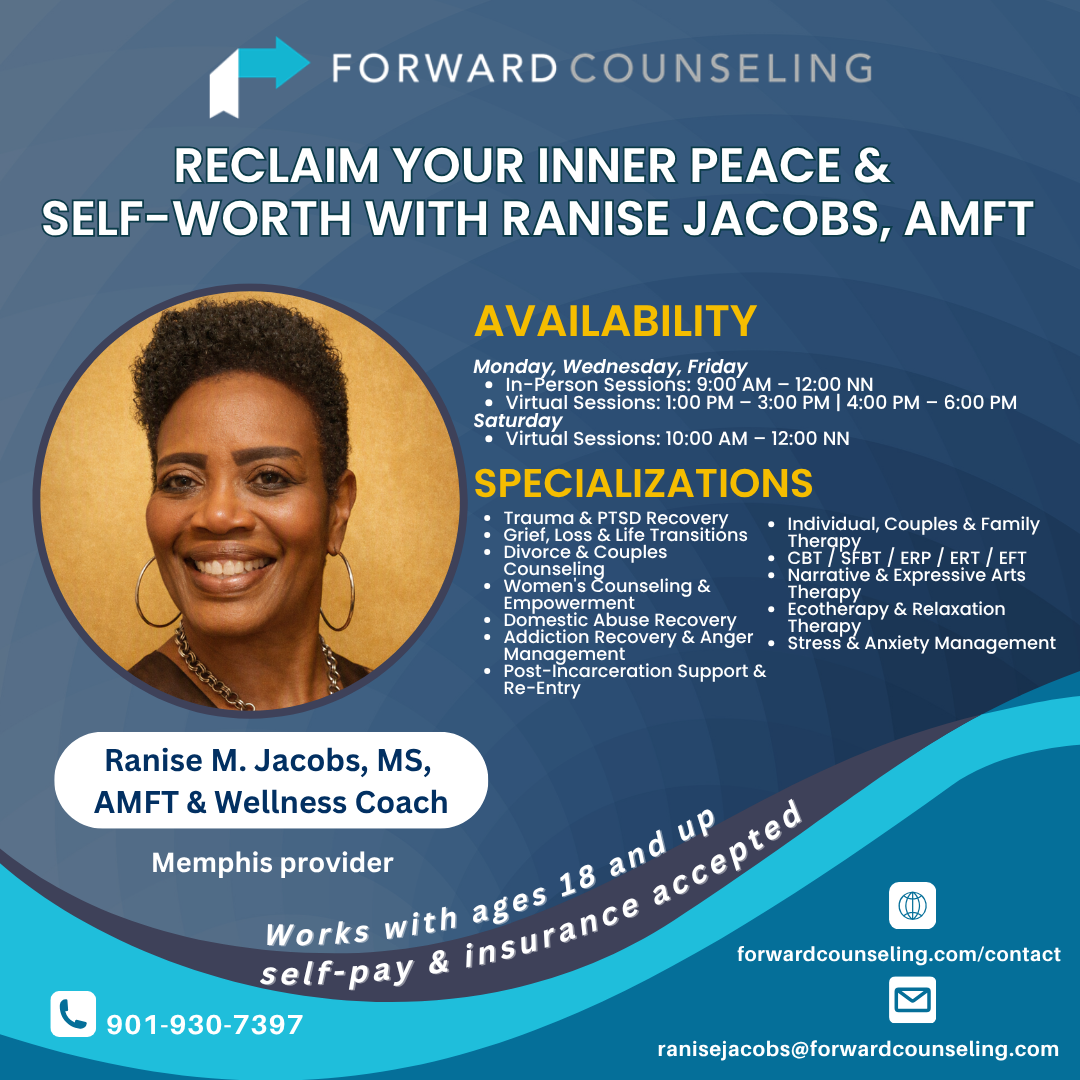
Ranise is currently accepting new adult outpatient clients, couples, and families for in-person sessions in East Memphis, TN, as well as teletherapy and ecotherapy options. Major insurances (including Aetna, Anthem, BCBS, Cigna, Evernorth, Humana, and United Healthcare) and self-pay options are accepted.
📞 Phone: (901) 930-7397
🌐 Book Online: forwardcounseling.com/contact
📧 Email: officemanager@forwardcounseling.com