
What is EMDR?
/
Eye Movement Desensitization and Reprocessing (EMDR) uses techniques like snapping and tapping to create bilateral stimulation and rapid processing within the brain. Activating this process allows old memories, feeling and thoughts to be “digested” and replaced with a positive belief (Rininger, D). EMDR is evidence based and treatment ends when patients can visualize themselves in a future scenario where they were able to face the re-elaborated targets while feeling no emotional discomfort (Santarnecchi et al., 2019).

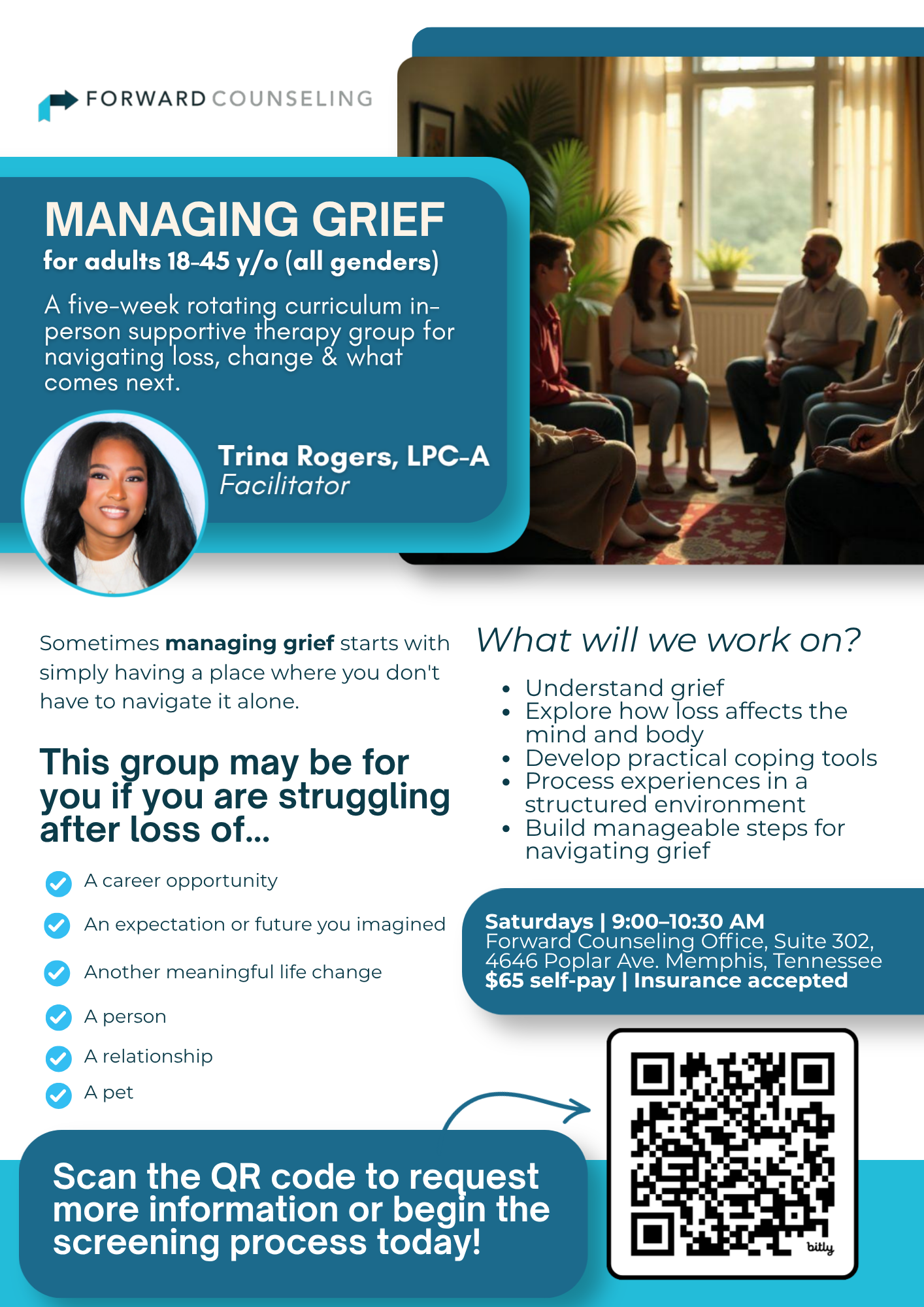

When grief persists for months or years without relief, it can alter every dimension of an individual's life, leaving them stuck in a cycle of emotional exhaustion and daily disruption. Whether caused by the loss of a loved one or life-altering non-death transitions like divorce or career shifts, long-term grief requires specialized psychological care. Through evidence-based approaches—such as Complicated Grief Therapy, somatic grounding, and the Dual-Process Model of Coping—professional counseling helps individuals process complex emotions, regulate their nervous systems, and integrate loss to safely rebuild resilience, purpose, and lasting hope.